
Celebrating the generation of ‘coming out’ at Kingston Pride Parade
‘Things do change, things get better’
ANNE KERSHAW
JUN 05, 2026
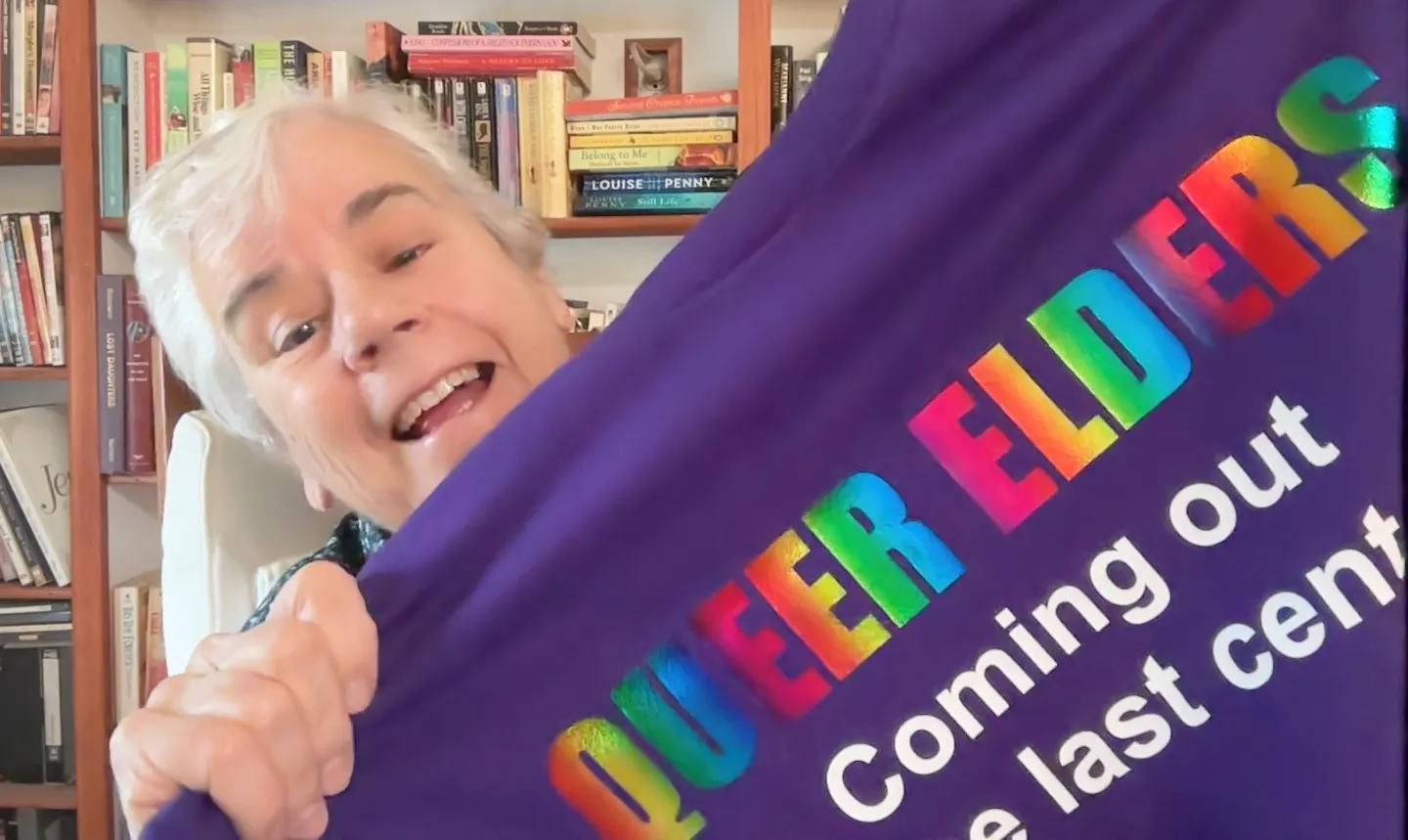
PATTY RIVERA Spencer jokes about being a part of the 2SLGBTQIA+ movement since the days when the acronym was just LG.
One of the organizers of a queer elders group marching in the Saturday, June 13 Kingston Pride Parade, she wants to provide visibility to the generation that for decades has been on the frontlines as activists and witnesses to momentous but hard-fought change.
“This is the generation of coming out, and coming out at a time when it was very dangerous for people to come out. They could lose their job, lose custody of their children, be evicted, and face financial risks,” she says.
Spencer notes that the motivation for coming out in those days was to thwart authorities who claimed that homosexuality could be used to blackmail people in federal government. This was during the Cold War. “The RCMP had a database of queer people. Their argument was that we were a national security risk. Our generation’s response to that pressure was to ‘just come out’,” she says.
On June 13, Spencer will be marching under the banner “Queer Elders – First to fight, Last to quit” and hopes to draw as many elder participants as possible, even if they are only able to walk for a block or wave from the sidelines. She will also be remembering the many men who are missing from this generation because of the AIDS epidemic.
Lack of role models
Recounting some of her own story, Spencer says she started being open about her sexual orientation in 1984 at age 30. “It was typical of our generation to come out at a later age,” she says. “Many women and men were already married and had children by the time they realized they were lesbian or gay. My generation didn’t have role models or mentors. We grew up thinking that lesbians and gays were from a seedy underworld.”
Many lesbians who came out when Spencer did in the mid 1980s connected strongly with the feminist community with whom they shared overlapping goals for civil rights. But they found prejudice there, too. It was a time when some in the national-level feminist movement didn’t want to be associated with lesbians, thinking it would give the movement a bad name. Lesbian feminists started referring to themselves ironically as the “lavender menace.”
Spencer has been an early adopter and trailblazer of queer rights issues. She was one of 15 who walked amongst shoppers along the sidewalk at Kingston’s first Pride Parade in 1989.
“Last year at the parade, we got to Bagot and Princess streets and I looked back up and saw the street jammed with people. Young people need to know that things do change, that things do get better. But you have to do the work and take the hits.”
First to be married
Spencer and her partner were the first same-sex couple in Kingston to be married, by a Metropolitan Community Church minister, before it became legal. They were also the first couple in Kingston to obtain a same-sex adoption in the courts when their child was born.
They successfully sued the government of Ontario for the right to include both biological and non-biological parents’ names on the birth certificate, a right available to all couples in Ontario since then.
In 1988, Spencer sold her car and used her savings to scrape together $5,000 to make a feature-length lesbian romance movie, completed on the shoestring budget with support from many friends and allies. In 2024 it was shown at the 25th anniversary of Reel Out as an example of lesbian films made in the 1990s. Called Dreamers of the Day, that was the first time it was shown in a real theatre.
Lesbian romance writer
She has since become an award-winning writer of lesbian romance novels, with eight fiction novels and one non fiction book to her name. Her ninth novel, Family We Haven’t Met, will be released in July.
The self-publishing business has been a boon to the 2SLGBTQIA+ community given the economics of traditional publishing, which can’t cater to minorities. “We are starting to see some really good writers coming out of the woodwork.”
Spencer writes for an audience of women who are age 50 and older. Though many mock the romance genre, she sees it as a vehicle that provides “many interesting spaces for readers to explore.”
She at times develops story lines for older women, some of whom may have “fallen behind” on issues being discussed in the community. “I can teach my readers about trans issues, for example, while they are reading, and have their minds and hearts open.”
A recent novel, called The Life Bestowed, is a love story between a cis and a trans character set in Prince Edward County. Her novel The Hum of Bees won a 2022 international Golden Crown Literary Award.
These days Spencer is also co-facilitating a monthly free discussion group for older LGBTQ2S+ folks at the Seniors Centre.
Changing discourse
Spencer notes how significantly the discourse has changed over the years as scientific and academic analyses about sex and gender minorities has grown. “In the mid- eighties we were arguing about sexual orientation, which today is referred to as ‘attraction’, but now the discussion is about gender identity, sex, and expression, as well as attraction.”
She’s generally optimistic. “I have great faith that we will continue to move forward. There’s always push back. But love has to win. Let people be who they are.”
When she needs inspiration, she looks to the Black civil rights movement in the U.S. where protestors “carried themselves with great dignity” as they crossed the Selma, Alabama bridge in the fight for voting rights. “They got beaten up, but that display of savagery against them helped turn the tide. The Black community taught us how to do it,” she says.
First published in The Kingston Crow
Used with Permission and Much Gratitude!